Win a Dräger
Alcotest 4000
Drug & Alcohol Testing Services
Our Solutions
Drug & Alcohol Testing Services
Drug & Alcohol Testing Types
4 minute read
News
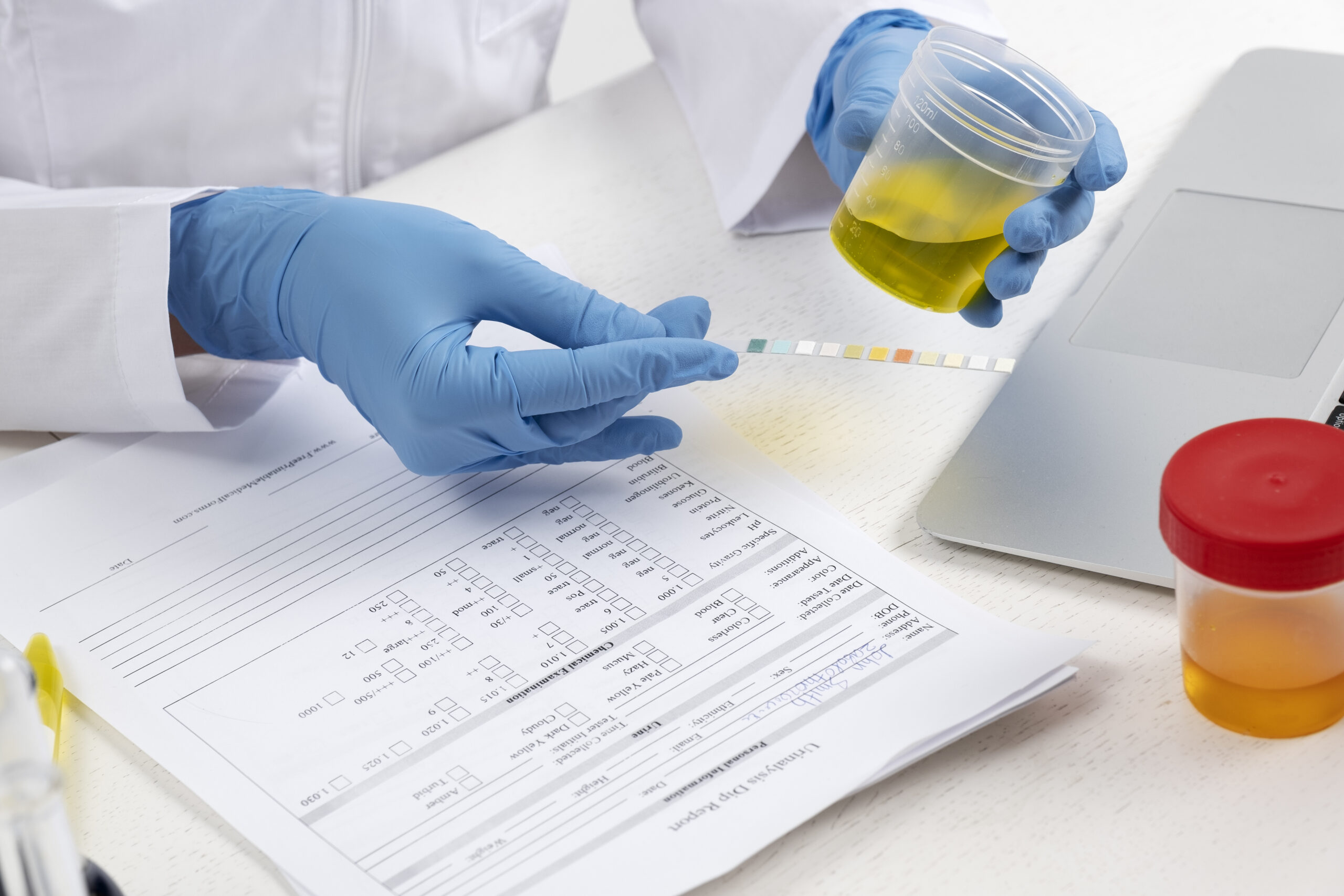
When it comes to workplace drug testing, there are several ways to collect a sample. Oral fluid, hair, breath testing… and then there’s urine.
It might not be the newest method on the block, but urine testing has been around for decades. So why does it remain one of the most widely used approaches to workplace drug testing?
And, more importantly, when is it the right choice?
Urine has been a cornerstone of workplace drug testing since modern testing programmes began developing in the 1980s.
Its popularity comes down to practicality. It offers organisations a well-established way of identifying drug use over a longer detection window than oral fluid typically provides.
Today, it remains a valuable option for employers looking to understand potential recent drug use and manage workplace risk.
Urine testing generally looks for drug metabolites – substances produced when the body processes a drug.
A positive result indicates drug use within a particular detection window. However, there’s an important distinction that every employer should understand:
Detection does not automatically mean impairment.
A positive urine result does not, on its own, establish that someone was under the influence or impaired at the time they provided the sample.
That’s why results should always be considered alongside workplace policies, the circumstances of the test and, where appropriate, laboratory confirmation and further investigation.
There’s no single answer, and that’s where things can get interesting.
Detection times depend on several factors, including the substance, the amount and frequency of use, individual metabolism and the testing cut-off.
As a general guide, many commonly tested substances may be detectable in urine for around 1–3 days. However, some substances, particularly following repeated or heavy use, can remain detectable considerably longer. Cannabis, for example, can have an extended detection window.
The key takeaway? The right testing method depends on the question you’re trying to answer.
Urine testing can be particularly useful for organisations looking for a broader recent-use detection window.
It can form part of a range of workplace testing programmes, including:
Across industries such as aviation, construction, maritime, transport, manufacturing and rail, having a clear, consistent and defensible testing process can play an important role in managing workplace risk.
Behind every sample is a person. That’s why the testing process matters just as much as the testing method.
At OdiliaClark, testing is carried out by trained professionals, with appropriate procedures, confidentiality and chain-of-custody processes in place. Where laboratory confirmation is required, we work with UKAS-accredited, ISO 17025 laboratories.
We can also help organisations develop their own in-house testing capability through tailored training, practical exercises and competency checks.
The aim is always to find an approach that works for your people, your environment and your risk profile.
Not necessarily.
There isn’t one testing method that’s right for every organisation or every situation.
Sometimes a longer detection window is needed. Sometimes identifying more recent use is the priority. And sometimes a testing method that can be carried out quickly and remotely is more appropriate.
The important thing is to start with the question, not the test.
At OdiliaClark, we believe good workplace drug testing starts with choosing the right method for the right reason.
If you’re reviewing your current testing programme or considering introducing workplace drug testing, we’d be happy to help you explore the options.
💙 The right test starts with the right question.


 Back to all