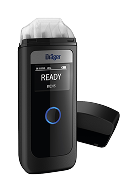
Win a Dräger
Alcotest 4000
Drug & Alcohol Testing Services
Our Solutions
Drug & Alcohol Testing Services
Drug & Alcohol Testing Types
3 minute read
News

Some experiences only happen once.
The solar eclipse on 12th of August was one of them. For many people, it was a moment to stop, look up and experience something they may never see in quite the same way again.
But it got us thinking about another kind of “once-in-a-lifetime” moment.
What if one moment at work changed everything?
Imagine turning up for work impaired after making a decision you thought you could manage. Perhaps you didn’t intend to put anyone at risk. Perhaps it was a one-off. Perhaps you were struggling with something privately and made a poor decision.
Then you fail a workplace drug and alcohol test.
Suddenly, the consequences can feel enormous.
Your job could be at risk. Your income. Your routine. Your relationships with colleagues. Your financial stability. For some people, there may also be concerns around pensions, professional reputation and their ability to continue working in the career they have built over many years.
And in a safety-critical role, the consequences can extend far beyond the individual.
That is the difficult reality of workplace drug and alcohol impairment: sometimes one decision can have consequences that last far longer than the effects of the substance itself.
This is where the conversation needs to become more nuanced.
A robust drug and alcohol policy should absolutely protect people. Employers have a responsibility to manage risk, particularly where impairment could affect machinery, vehicles, colleagues, customers or members of the public.
But managing risk does not necessarily mean treating every incident as the end of someone’s employment.
There is a difference between accountability and punishment.
Training, education, appropriate testing, clear policies and early intervention can all play a role in helping employees understand the risks before an incident happens.
And when an incident does occur, organisations may need to look beyond the test result.
Was this genuinely an isolated mistake?
Is there an underlying issue that needs support?
Does the employee understand the potential consequences?
Is there a safe and appropriate way to help them return to work?
None of this means compromising safety.
In some circumstances, particularly in safety-critical roles, removing someone from duties may be absolutely necessary. Immediate action can protect the employee, their colleagues and the wider public.
But removing someone from a safety-critical task does not have to mean removing them from the organisation forever.
This is why workplace drug and alcohol education matters.
Good training isn’t about frightening employees or creating a culture of suspicion. It is about helping people understand what impairment looks like, how substances can affect judgement and performance, what their organisation expects from them, and where they can turn for help.
Because the best outcome isn’t catching someone after the mistake.
It’s preventing the mistake from happening in the first place.
A drug and alcohol policy should create clear boundaries. But it should also create clarity, education and, where appropriate, a route towards support.
Because people make mistakes.
People also recover, learn and change.
The challenge for employers is knowing when a situation requires firm action, when it requires further investigation, and when it requires support, while never losing sight of the fundamental priority:
Keeping people safe.
One moment shouldn’t necessarily define a person’s entire life.
But in the workplace, particularly where safety is involved, we should never underestimate how much one moment can change it.






 Back to all