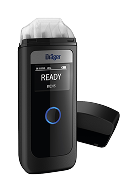
Win a Dräger
Alcotest 4000
Drug & Alcohol Testing Services
Our Solutions
Drug & Alcohol Testing Services
Drug & Alcohol Testing Types
7 minute read
News

For organisations operating across Belgium, the Netherlands and Luxembourg, workplace drug and alcohol testing presents a unique challenge.
Although these neighbouring countries share close economic relationships and operate within the wider European regulatory framework, their approaches to workplace testing differ significantly.
Employment legislation, privacy requirements, occupational health obligations and sector-specific regulations all influence when testing can take place, how results are managed and what employers must consider before implementing a testing programme.
For businesses operating in safety-critical industries such as transport, logistics, aviation, energy, manufacturing and construction, understanding these differences is essential. The challenge is not simply arranging a test; it is ensuring that testing is proportionate, legally appropriate and capable of providing reliable evidence when it matters most.
Many multinational organisations assume that a single global drug and alcohol testing policy can be applied consistently across all locations.
In practice, this approach can create challenges.
While the General Data Protection Regulation (GDPR) provides a common framework for protecting personal data across Europe, each country applies additional employment, privacy and occupational health requirements that influence workplace testing practices.
A programme that is acceptable in one jurisdiction may require adjustment in another.
For employers managing employees across multiple countries, this creates several challenges:
The result is that international employers need more than access to testing services. They need a structured approach that combines local understanding with global consistency.
Belgium takes a preventative approach to workplace alcohol and drug management.
Collective Labour Agreement No. 100 requires employers wishing to introduce workplace alcohol and drug policies to establish a clear preventative framework. The objective is to promote workplace safety and wellbeing rather than simply provide a disciplinary mechanism.
Testing must be carefully considered and implemented in a way that respects employee privacy and data protection requirements.
Employers must ensure that any testing programme has a clear purpose, is proportionate to the risks involved and is communicated transparently to employees.
For organisations operating safety-sensitive roles, this means workplace testing policies must be carefully designed rather than simply adopted from another country.
The Netherlands places significant emphasis on employee privacy and the protection of personal data.
Workplace testing involving information relating to drug or alcohol use can create complex privacy considerations, particularly where health-related information is involved.
Employers must carefully consider the legal basis for testing, how information is collected, who has access to results and how data is stored.
In sectors where impairment could create significant safety risks, organisations must ensure their approach aligns with applicable legislation and professional guidance.
For multinational employers, the challenge is maintaining effective safety standards while respecting the stricter privacy environment that exists within Dutch employment practices.
Luxembourg also places strong importance on employee rights, privacy and proportionality.
Where employers consider drug and alcohol testing necessary, particularly in safety-critical environments, they must ensure that the approach is justified and appropriately managed.
As with Belgium and the Netherlands, organisations must consider why testing is required, how employees are protected and how any information generated through the process is handled.
This is particularly relevant for companies employing cross-border workers, where employees may live in one country, work in another and operate across multiple locations.
For organisations operating throughout the Benelux region, the greatest difficulty is often not understanding that compliance matters, it is knowing how to achieve it operationally.
A workplace incident does not always happen during normal working hours. Employees may be working remotely, travelling between countries or operating in locations where immediate access to traditional testing facilities is limited.
When impairment is suspected, delays can create significant challenges:
This is where a coordinated international testing solution becomes valuable.
A successful international drug and alcohol testing programme requires more than simply providing a test.
Employers need a process that considers local requirements, maintains chain of custody and delivers reliable results wherever employees are located.
One of the biggest challenges for multinational organisations is maintaining consistent standards while adapting to different legal environments.
A global testing partner allows organisations to establish a consistent framework while ensuring testing is delivered appropriately within each jurisdiction.
This approach helps employers maintain confidence that procedures, documentation and reporting standards remain aligned across different countries.
In many workplace incidents, timing is critical.
A delayed test can affect the reliability of results and increase uncertainty for both employers and employees.
OdiliaClark’s Drug and Alcohol Remote Testing (DART) solution was developed to address this challenge by providing organisations with rapid access to drug and alcohol testing support, including situations where employees are located remotely or outside traditional testing environments.
By connecting employers with trained testing professionals and an international support network, DART helps organisations respond quickly while maintaining a structured and compliant process.
For safety-critical employers, a test result may influence internal investigations, employment decisions, insurance considerations or regulatory reviews.
This means the process must be reliable from collection through to final reporting.
A robust testing programme should include:
Speed is important, but accuracy and evidential integrity are equally essential.
Another challenge organisations face is uncertainty around what action to take when impairment is suspected.
Managers need clear guidance on:
Having an established testing partner and defined procedures helps organisations respond confidently rather than making decisions under pressure.
International businesses need testing solutions that recognise the realities of modern workforces.
Employees may operate across borders, work in remote locations or perform roles where safety is critical. A successful testing programme must therefore combine compliance, accessibility and operational practicality.
OdiliaClark supports organisations by providing access to international drug and alcohol testing services designed for complex working environments.
Through DART, organisations can access a coordinated testing solution designed to support rapid deployment, reliable processes and consistent standards across multiple locations.
For employers operating throughout Belgium, the Netherlands, Luxembourg and beyond, this provides a practical way to manage workplace testing challenges while protecting employees, maintaining compliance and reducing operational disruption.
Workplace drug and alcohol testing across the Benelux region requires careful consideration.
Belgium, the Netherlands and Luxembourg each have their own approach to balancing workplace safety, employee rights and privacy obligations. For international employers, applying a single approach without considering local requirements can create unnecessary risk.
The most effective programmes combine clear policies, appropriate procedures and access to experienced testing professionals who understand the challenges of cross-border operations.
By combining global capability with local delivery, organisations can create testing programmes that are not only compliant, but practical, responsive and capable of supporting safer workplaces.






 Back to all