Win a Dräger
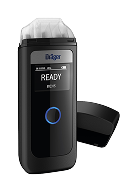
Alcotest 4000
Drug & Alcohol Testing Services
Our Solutions
Drug & Alcohol Testing Services
Drug & Alcohol Testing Types
For any further requests or support send us your questions to [email protected] and one of our team will be in touch.
Testing programmes vary from one business to another. We can offer fully outsourced drugs and alcohol testing programmes or we can train your staff to carry out drugs and alcohol testing in-house. Annual refresher training is required for all in-house testers.
Yes, we work in a variety of industries throughout the UK, Europe and further afield. We are always open to bringing a new location on-line. Please contact us with any requirements [email protected].
At OdiliaClark, we go far beyond simply conducting tests. What sets us apart is the holistic support we provide both during and after the process.
Unlike many providers, we don’t just deliver results — we help interpret them, support the employee, and guide the organisation on the next steps. Our peer support model ensures employees feel understood and supported by people who have been in similar situations, which makes a real difference to engagement and outcomes.
We also provide tailored recommendations following testing, helping organisations make informed decisions that balance compliance, employee wellbeing, and business needs. Every organisation is unique, which is why we offer bespoke packages designed around your culture, priorities, and challenges — rather than a one-size-fits-all solution.
This combination of testing, peer support, actionable guidance, and flexible packages is what makes OdiliaClark a trusted partner in creating healthier, safer workplaces.
A list of personnel on site on the day of testing will be generated prior to the testing associate/collection officer arriving on site. This list will be provided to the testing associate/collection officer by the testing agency, who will then randomly select the appropriate number of individuals for testing. This selection can also be conducted prior to any testing taking place or before the testing associate/collection officer arrives on site.
Yes, they will be asked by the Testing Associate if they agree to be tested. The Donor must provide written consent. The employee should be made aware that a refusal to be tested will be regarded as an unreasonable response and treated as a positive test result which may lead to disciplinary action up to and including dismissal.
Testing should be viewed as a safety net working in conjunction with support programmes to ensure employees and the organisation are protected.
Most medications are safe to take but any medication either prescribed or over the counter medication has the potential to cause side effects which could affect yours and others safety in the workplace. You should advise your GP/Pharmacist of your job role and/or operating plant and equipment or operating in a potentially dangerous environment. The GP/Pharmacist can then decide whether it is appropriate for you to work normally or recommend alternative arrangements. If you are experiencing side effects such as drowsiness, fatigue or adverse effects to your balance and you work in a safety-critical role or drive for business you should let your line manager know. They may take advice from Occupational Health to ensure it is safe for you to continue to undertake your current duties or find out if a temporary amendment to duties is required.
This is dependent on your workplace policy and whether specific ongoing testing and monitoring is required for an individual recovering from a substance abuse issue. At OdiliaClark, we have a number of recovery and monitoring services available to support an individual throughout their journey back to work.
Yes. Alcohol can stay in your system for a significant period. Alcohol metabolises at different rates and is dependent upon various factors including an individual’s build, health and any other medications they may be taking. It is your responsibility to report for work unimpaired by alcohol or drugs or their effects.
Many factors determine how long drugs remain present in the body. Some drugs, including cannabis, can be detected weeks after consumption, and therefore unannounced random screening may lead to a positive result.
Yes. You will be asked about any medications you are taking if the test leads to a non-negative result. All non-negative results will require further laboratory analysis. The Testing Associate will ensure that all information about your medication is noted with the sample. Taking more than the prescribed amount can affect performance and may be regarded as misuse or abuse.
If you take the medication responsibly, and have discussed it with your line manager if in any doubt, then a non-negative test should not be a concern for those medications. Modern testing equipment can detect low levels of drugs, and the laboratory process is part of separating out what is acceptable intake of medication and what is not.
This should be defined within the organisation’s drugs and alcohol policy, however, you may be stood-down if your role or the activities you perform are classified as safety critical.
The outcome of a positive result depends on your organisation’s drug and alcohol policy. Individuals in safety-critical roles may be stood down and temporarily moved to alternative duties. Options following a positive result can include monitoring and peer support, both of which OdiliaClark provides.
A process known as ‘chain of custody’ applies. This ensures that two samples (Sample A and Sample B) are clearly labelled and sealed in tamper-proof tubes and envelopes in front of the Donor. It provides an audit trail for the sample sent for analysis to safeguard its identity and integrity from collection through to reporting of the test results.


